
Sound Meditation Explained
What actually happens when you lie down with a singing bowl

Meditation requires listening - an active doing. Hearing is passive. You heard the car honking outside the window, or the table next to you in a restaurant, discussing politics.
Sound meditation asks you to listen. Actively.
I want to start with a name: Is it sound healing? Sound bath? Or, as I prefer, and as my teachers David Shemesh and Alexander Tannous taught me, sound meditation.
Why Sound Meditation?
In the traditional Buddhist practice of meditation, the student gets instructions from the teacher. I received my first ones during a Vipassana retreat years ago. Concentrate on the breath. The sensation of the breath coming and going. Goenka’s voice would repeat over and over in a dharma hall: “Below the nostrils, above the upper lip.”
I have moved away from Goenka’s instructions, but still sit with mindfulness of breath in the Theravada tradition most days.
The idea is simple. In mindfulness of breath, our meditation object is the breath. Pay attention to when it comes and goes. If the mind wanders, as it often does, count it or feel the sensations, coming back to it again and again. In the beginning, it is a lot of work.
In sound meditation, the sound is our meditation object. The participant focuses on the sound, listens to it, and becomes a practitioner. Meditator. The goal is to return to the sound whenever we get distracted. It gives us an anchor, a sense of agency. Imagine having no anchor when your friend starts snoring.
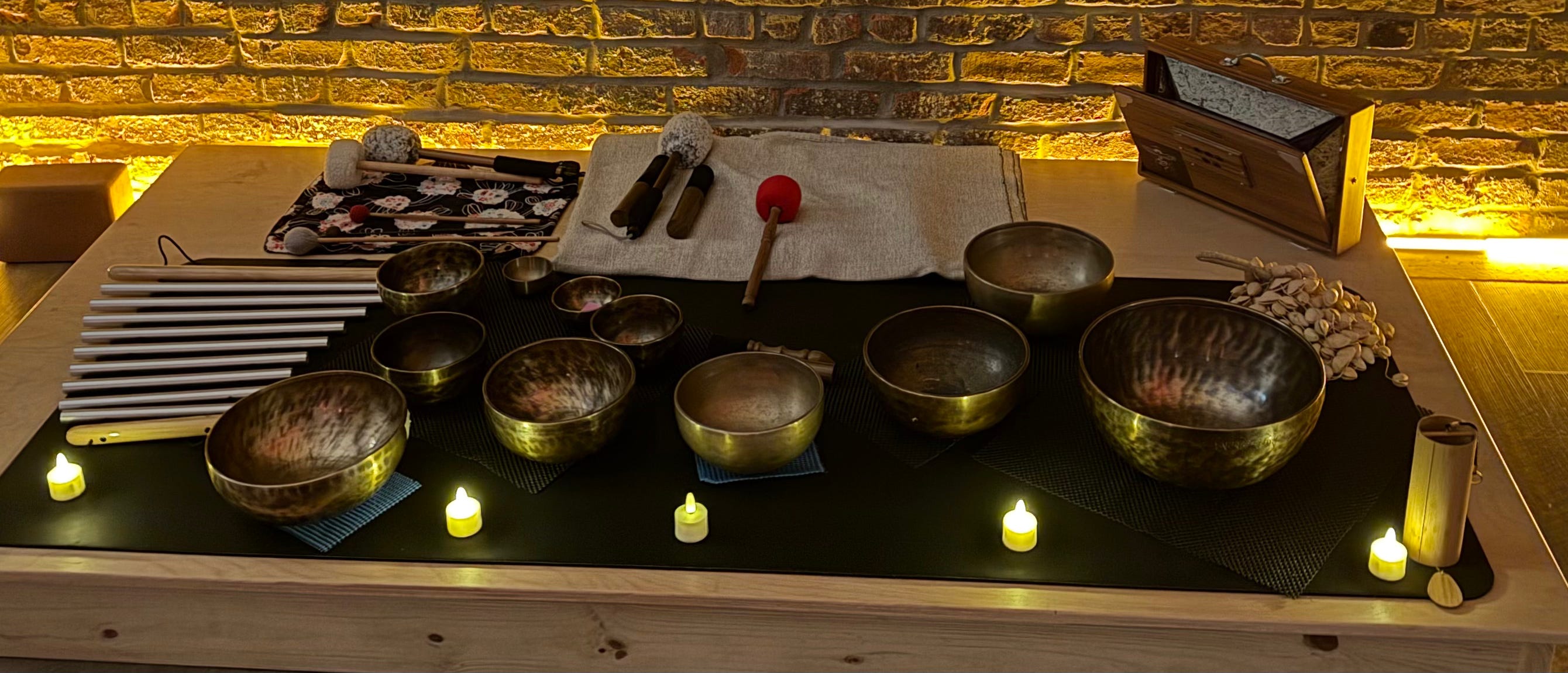
Sound bath. Sound healing
When we call the practice a sound bath, the participants are not practitioners - they are bathing in the sound. Almost like bathing in water: your mind could be part of it, or it could not.
When we call it sound healing, we are being promised to be healed by sound. It could be true, and we will touch on that - but it’s a promise that cannot be guaranteed. It puts the facilitator in quite an awkward position. Suddenly, they have to deliver a healing.
And I am not a healer.
I am a Sound Meditation Facilitator. People who came to class practice sound meditation, perhaps healing themselves. The name is important - it changes our attitude towards practice.
Intentional Practice of Rest
In somatic therapy, rest & digest is a big part of the educational repertoire — learning how to rest intentionally, how to digest life, and how to nourish ourselves so there is more energy, more creativity, more receptivity.
The opposite of rest in somatic re-pattering, the method I was taught, exists on two ends of body tone or nervous system tone: collapse and tension.
Think of it as a range: Collapse — Rest — Tension. Both collapse and tension take a toll on our nervous system, and neither allows us to nourish ourselves.
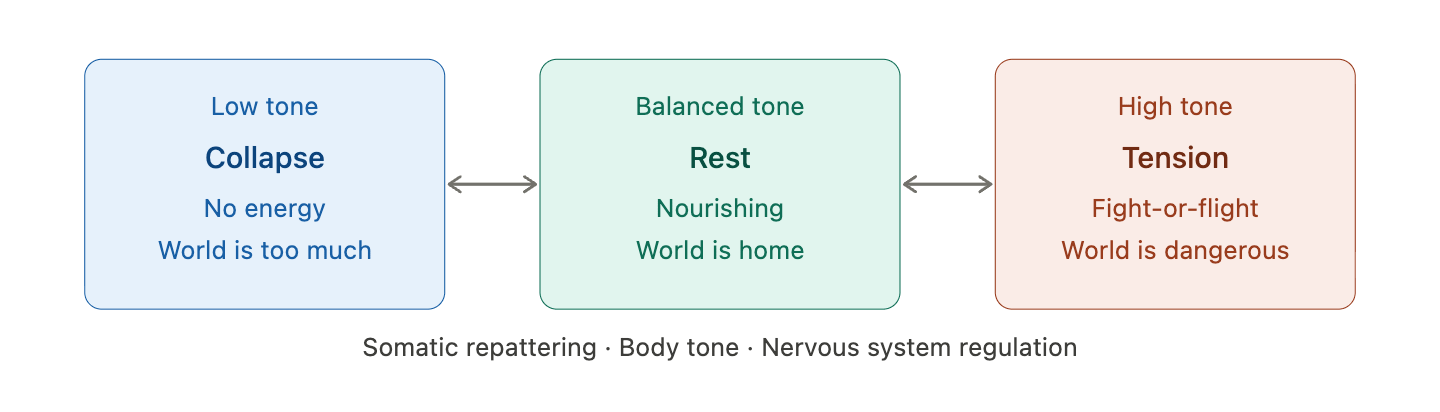
Collapse is incredibly low tone: No energy, the world is too much, I need to hide. Collapse happens to us; it is not intentional. I don’t know anyone who wants to collapse, even though I know many who are doing everything to get there. Me included, sometimes.
Tension is very high tone: I am prepared to fight, to answer fast, to think fast, to defend. The world is not safe. I am bracing myself, ready to run. Also, my territory.
If you go to a party and then rest most of your Sunday, the party was a fun activity, but not rest. Same with an active vacation, a workout, or scrolling through Instagram. These are activities that require you to rest afterward.
Rest is neither passive nor extremely active. It is a balanced tone for our body and mind. Rest doesn’t require rest after.
Sound meditation creates that space through listening, feeling the vibration, and shifting the brain wave. But that’s not it.
Nervous System Regulation
Sound is a tool to regulate the nervous system, and a sound meditation class is a form of co-regulation.
The nervous system has two primary modes:
Parasympathetic mode is a state of calm.
Sympathetic mode — not so sympathetic to us — is a state of fight-or-flight, or the average ride on the New York subway.
Techniques that bring us to a calm state include breathing, cold exposure, movement, and many others, including meditation and sensory input.
If you have been to a sound meditation before and managed to listen instead of running through your errand list, you likely felt grounded and calm walking out of the room. That is you regulating your nervous system.
Co-regulation is connected to others, doing an activity in a room with other people, and also regulating alongside the nervous system of the facilitator. So choose your facilitator wisely.
In a study using Tibetan singing bowl meditation on mood, anxiety, pain, and spiritual well-being, participants reported significantly less tension, anxiety, fatigue, and depressed mood after the practice, especially beginners.
The Waves
Hans Jenny — a Swiss scientist from the land of other adventurous discoveries, like LSD — researched the effect of acoustics on water. The photographs of that effect are mesmerizing.
Jenny placed sand, salt, and liquids on metal plates and ran different frequencies through the plates. All of the materials organized themselves in geometric patterns - different at every frequency, consistent and repeatable. And returned to chaos when the sound stopped.
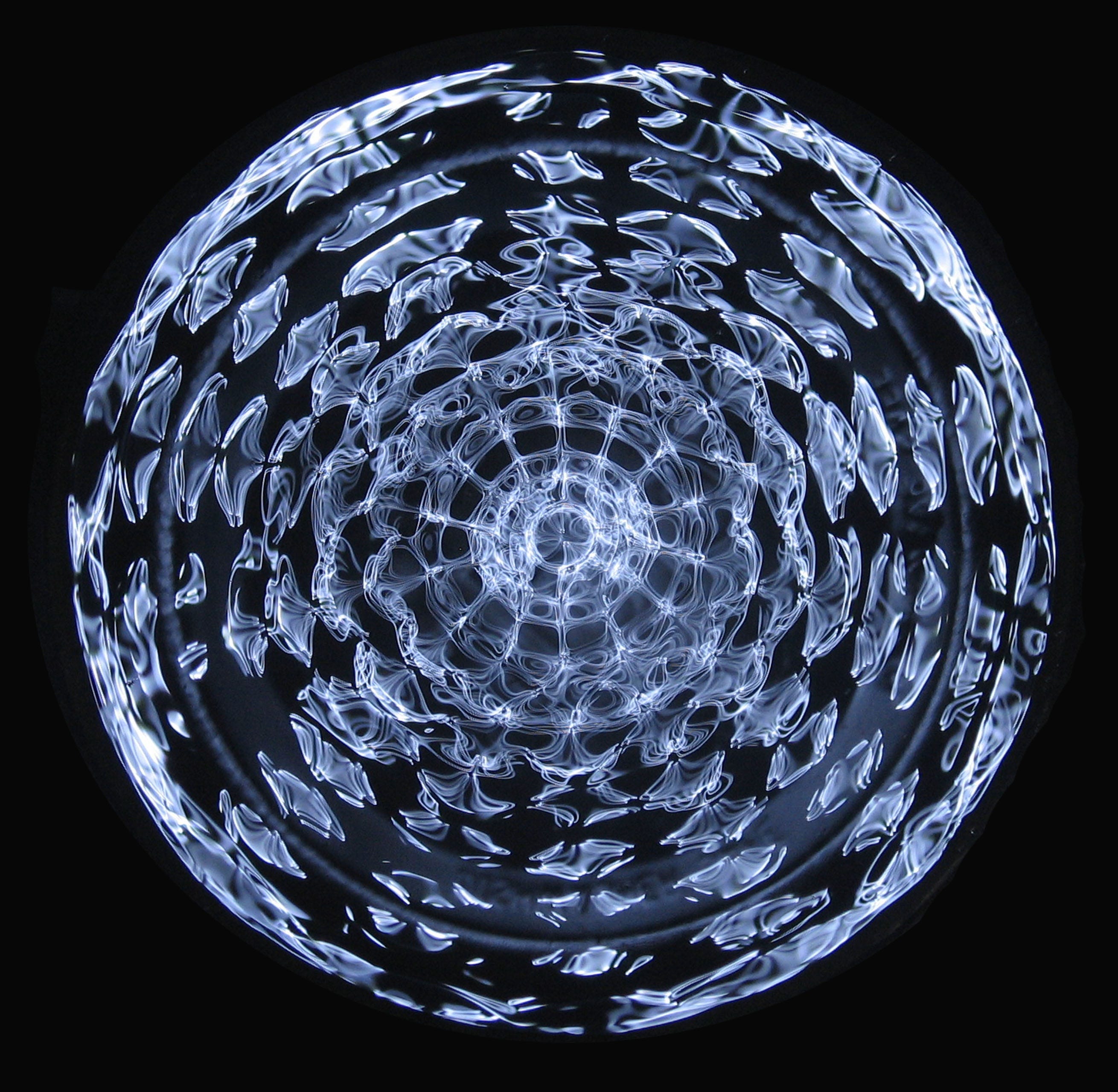
The waves of acoustic instruments affect the whole body. We can feel the gong, Tibetan bowls, and a really good speaker delivering bass at a rave — with the entire body.
Cymatics show us the sound organizing chaos in a very aligned and beautiful pattern in water. And we are mostly water, our body is 60%, and the brain is about 73%. It does the same to the mind, affecting the brain waves. Our brain has its own waves:
Beta (13–30 Hz) — normal waking state. Thinking, planning, worrying. Most of us live here. Too much beta = mental noise + anxiety.
Alpha (8–13 Hz) — the space between active thinking and sleep. Daydreaming, light meditation. Creativity also lives here.
Theta (4–8 Hz) — deep meditation, light sleep, vivid imagery. The hypnagogic state — that edge between waking and sleep. Emotional processing happens here. Children spend a lot of time in theta, which is why they learn so fast and feel so deeply. Experienced meditators can access this while awake.
Delta (0.5–4 Hz) — deep dreamless sleep. Very hard to access consciously unless you’re a long-term meditator.
Gamma (30–100 Hz) — counterintuitively, the highest frequency, associated with peak states, insight, and heightened perception. In studies led by neuroscientist Richard Davidson at the University of Wisconsin, experienced Tibetan monks showed unusually high gamma wave activity during meditation — representing heightened awareness and what researchers described as pure consciousness
Most people live in beta, and arrive at the class in beta.
When I ask people to share at the end of the practice, how do they feel now? One word or one sentence. The most popular answers, in a room of 30 people, are always the same:
Rested. Grounded. Gratitude. Clarity.
The chaos gets digested, and the clarity takes place. It is an organized pattern created with sound. It is an integration process and a rest practice — that's why I work with sound.